How to Find Direct Shippers (And Actually Get the Load)
Every owner-operator eventually asks the same question: how do I cut out the broker? Direct shippers pay 15–30% more than the same load off a load board — the difference is the broker's margin. But getting direct loads isn't a trick. It's a slow, unglamorous process of outreach, relationships, and operational reliability. Here's the honest playbook.
Last updated: 12 min readBy OverTheRoad.AI Team
Direct shipper economics
| Typical broker margin | 15-30% (you have the right to request the records under 49 CFR 371.3) |
|---|---|
| Direct shipper rate vs broker rate | Same lane, 15-30% higher direct |
| Timeline to first load | 3-6 months from first contact |
| Timeline to steady capacity | 12-18 months of consistent execution |
| Cold-call hit rate | ~1 in 30-50 calls = meaningful conversation |
| Realistic mix | ~30% direct early on, growing to ~50-60% direct after a few years — not 100% direct |
| Best shipper size | 200-2,000 employees, regional or single-distribution-center |
| What gets you fired | Late delivery, no-show, communication gaps. Rate disputes are recoverable; reliability failures aren't. |
Why Direct Shippers Pay More (And What Brokers Don't Want You Knowing)
A typical load you haul off DAT looks like this: the shipper agreed to pay the broker $4,000 to move a load from Dallas to Atlanta. The broker books you at $3,000. The broker keeps $1,000 — a 25% margin — for doing the matchmaking. You never see the $4,000 number; you only see the $3,000.
Broker margins vary. On easy, high-volume lanes they're closer to 12–18%. On hot markets during disruptions, they can hit 35–50%. The carrier-facing rate confirmation never shows the shipper's rate, so most drivers only guess at the spread.
Federal regulation (49 CFR § 371.3) gives you the right to request the broker's transaction records — the underlying paperwork behind the load. Most drivers don't know this. Fewer actually request it, because it strains the relationship. But it's a big piece of data separating "I know what my freight is worth" from "I take what's offered."
Pro Tip
Before you chase direct shippers, know your current effective broker margin per load. Rate transparency for your existing brokers is the starting point — direct shippers are just the long-term play once you've mapped the margin picture.
The Realistic Tradeoffs
Before you pursue direct freight, know what you're signing up for:
- You become your own broker. Sales, billing, collections, claims, insurance certs — all on you. Brokers shield you from that work; direct shippers don't.
- Payment terms are usually longer. Brokers Net 30 is standard. Direct shippers often Net 45–60, because that's how their accounts payable works. You need cash reserves or a factor to float the gap.
- You need better insurance and paperwork. Most mid-size shippers require $1M liability (vs FMCSA's $750K minimum), $100K+ cargo coverage, specific endorsements, and W-9s. Budget for higher insurance premiums.
- Deadline discipline matters more. A broker might tolerate an occasional late pickup; a direct shipper remembers. One missed appointment can end a relationship.
- One or two shippers, not fifty. The sweet spot for an owner-operator is 1–3 direct shipper relationships plus broker fill-in. Too many direct shippers becomes a full-time sales job.
The 4 Ways to Actually Find Direct Shippers
Every method below works — but they work at different rates and require different amounts of effort.
- 1. Cold outreach at warehouses and distribution centers. Slowest but cheapest. Walk into shipping offices on existing routes, ask for the traffic manager, leave a capabilities one-pager with MC#, insurance info, and lane preferences. Expect 1 in 30 to turn into anything in 6+ months.
- 2. Reverse-research from your existing broker loads. Every rate confirmation has the shipper name and pickup address. Keep a spreadsheet of shippers you've actually loaded for. 90 days in, you'll have 40–80 shipper names — use them as your outreach list, because you already know the dock setup and have an in.
- 3. Shipper databases and networking.DirectFreight.com, Shipper List, and similar paid services compile shipper contacts by industry. Less gold than pure direct outreach, but structured. Regional trucking associations and industry groups (NASTC, OOIDA, state trucking associations) run networking events where shippers attend.
- 4. Inbound from a real brand. If you publish a professional website, get on Google Business Profile, and maintain a clean DOT record, a small percentage of shippers will find you. Slow build, but compounds. Low upfront cost.
The Cold Outreach Script That Actually Works
You walk into a shipping office. Here's what to say:
What makes that script work:
- Opens with your qualifications before asking for anything
- Positions you as a backup, not a replacement — no threat to existing relationships
- Respects their time by asking for a name, not a commitment
- Works even with gatekeepers because you're not trying to sell
Follow up with an email the same day, capabilities PDF attached. Check in every 4–6 weeks. Expect it to take 3–6 months before the first load. This is how trucking relationships have always been built — it's not fast, but it's durable.
What a Shipper Actually Requires From You
Before a mid-size shipper will move a load with you, you'll go through a carrier onboarding packet. Standard items:
- W-9 for their AP department
- Certificate of Insurance (COI) listing the shipper as certificate holder. $1M liability, $100K cargo typical; some require $250K cargo or higher.
- FMCSA authority verification (they'll pull SAFER themselves, but your MC letter helps)
- Safety rating / CSA snapshot — they check, even if you don't send it
- Carrier packet with emergency contacts, claims process, driver contact protocol
- Signed Transportation Agreement setting payment terms, liability, and claims handling
Have all of this ready as a PDF bundle before you walk in. Shippers who have to nag you for documents for two weeks often decide you're not worth the trouble.
The Economics: How Much More Do Direct Loads Actually Pay?
The spread varies by lane, commodity, and equipment type, but typical numbers:
- Dry van, general freight: 15–25% above broker rate for the same lane. Net of longer payment terms and harder loading, the real uplift is often 10–18%.
- Reefer / flatbed: 18–30% above broker rate. Shippers value specialized equipment reliability highly and pay for it.
- Hazmat / oversize: Can be 25–40% above broker. The regulatory complexity is what they're really paying for.
A full switch from 100% broker to 100% direct freight is neither realistic nor advisable for most owner-operators. A mature mix is usually 50–60% direct with the rest filled in from brokers on the return lane. That way one lost relationship doesn't mean an empty truck.
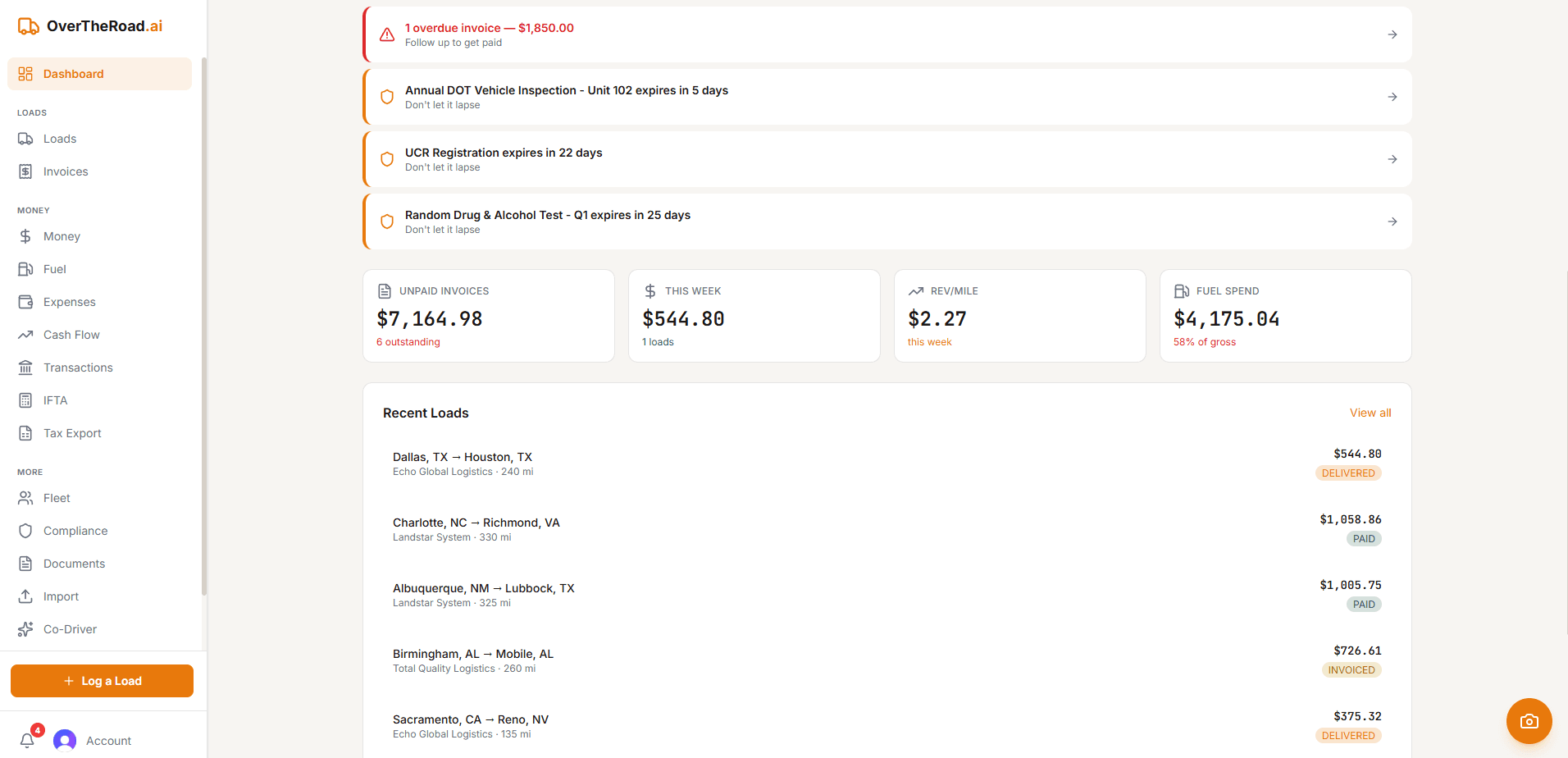
How OverTheRoad.AI handles this
See what the broker actually kept
- Federal regulation (49 CFR 371.3) gives you the right to request the broker's transaction records — OverTheRoad.AI drafts the formal request for you
- Runs on your MC# and letterhead with the exact regulatory citation
- Builds the broker-margin dataset you need to prioritize which lanes are worth going direct on
- Shows which of your brokers are extracting 30%+ margin — and are therefore the top targets for replacement
The Long Game: What Good Direct Relationships Look Like 2-3 Years In
Carriers who've been at this for a few years share a similar profile:
- 2–4 anchor direct shippers supplying roughly half to 60% of their weekly revenue, with brokers filling the rest
- Consistent weekly lanes — same origins, same destinations, predictable schedule
- Brokers used for return-lane fill only, not primary freight
- Higher insurance premiums ($12K–$15K/year typical) offset by significantly higher revenue per mile
- Average DSO (days-to-pay) of 35–45 days vs 28–35 for broker freight — managed with $40K+ cash reserves
- One bad relationship loss doesn't kill the business — the diversification is real
This takes time. Most successful direct-freight owner-operators started meaningful outreach around month 18–24 of their authority, made their first direct load around month 24–30, and reached the 50% direct mix in years 3–4. The grind is real, and not everyone makes it — but the ones who do rarely go back.
Frequently Asked Questions
How much more do direct shippers pay than brokers?
Typically 15–30% more than the same load booked through a broker. The higher end (25–30%+) is more common in specialized freight (reefer, flatbed, hazmat) and less common in generic dry van. Net of longer payment terms and heavier paperwork, the real uplift is often 10–20%.
How do I get my first direct shipper contract?
Start with shippers you've already loaded for through brokers. You know their dock, their gate, their paperwork, and their freight. Walk in (or call the traffic manager) and position yourself as a reliable backup carrier. Most direct relationships start informally — one load as a favor — and build from there over 6–12 months.
Do direct shippers pay faster than brokers?
Usually slower, actually. Brokers commonly run Net 15–30; direct shippers typically run Net 30–60 because that's how their AP departments work. Plan for higher cash reserves (or factoring) to float the longer payment cycles.
Can I find direct shippers on a load board?
Rarely. Most loads on DAT, Truckstop, 123Loadboard are brokered. Some platforms (like Convoy until its 2023 shutdown, Uber Freight, and a handful of digital brokerages) are the "broker" themselves. True direct shippers don't usually post on public load boards — they have established carrier rosters.
What insurance do direct shippers require?
Most require $1M primary liability (vs FMCSA's $750K minimum) and $100K–$250K cargo coverage. Some require specific endorsements for their commodity type (refrigeration breakdown for reefer, etc.). Budget 20–40% higher insurance premiums if you upgrade to $1M from $750K.
Should I cut out all my brokers when I find direct shippers?
No. Even experienced direct-freight owner-operators typically keep broker freight as 40–50% of their business for return-lane fill and diversification. A 100% direct operation is fragile — one relationship loss can empty your truck for weeks. A mature mix is usually 50–60% direct with the rest filled in from brokers.
Related Guides
Want your real cost per mile in 3 minutes?
Drop a settlement or rate con — our free analyzer pulls CPM, RPM, broker margin, and IFTA prep.